The Complete Guide to Residential Garage Door Sizes
Residential garage doors sizes don’t have to be complicated. Let’s take a look at the most common sizes and some tips that may help with your next purchase.

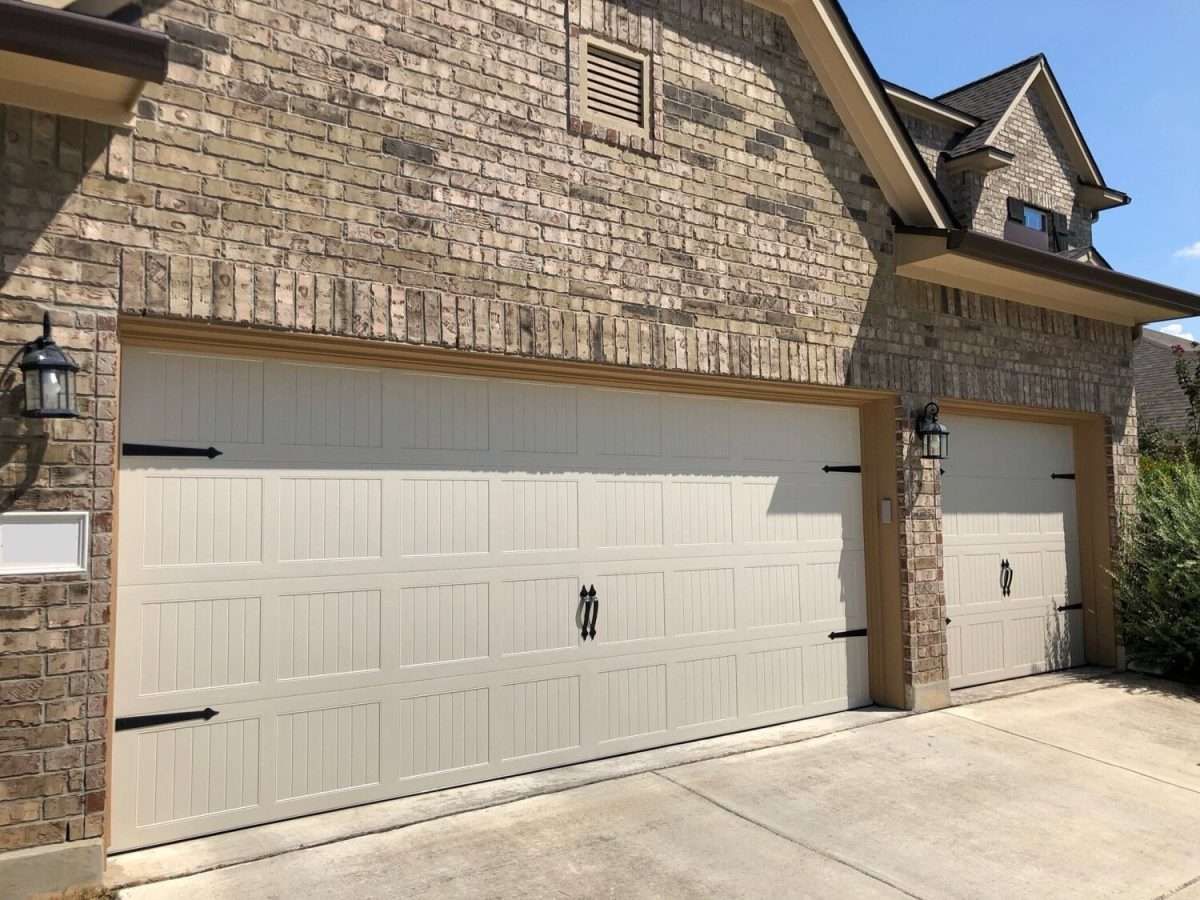
Residential garage door sizes can be confusing when you first start doing your research. What used to be standard is no longer the norm due to the increase in vehicle sizes and homes in general.
So many questions will arise about widths of single and double car garage doors, golf cart door sizes, the best size of garage door for trucks and RV’s, and so on.
In this article, we are going to cover everything you need to know about garage door sizes, whether it’s for a new home you’re building from scratch or existing garage doors you're looking to replace on your current home.
What Sizes Do Garage Doors Come In?
Before we go further into garage door sizes, let’s first clarify what the numbers mean. Anytime you see a garage door size like “8×7”, the first number is the width. So, if you are in the market for an 8×7 door, you are looking at a garage door that is 8 foot wide by 7 foot tall.
Standard One-Car Residential Garage Door Sizes
- 8×7
- 9×7
- 10×7
- 12×7
- 14×7
The 8×7 size is the industry standard when it comes to one-car garage doors. If you are building a new home and going with single car garage doors, I would recommend having at least a 9×7 door installed.
The additional one foot of breathing room will help to get into the garage, especially with larger vehicles. If you can make it happen, a 10×7 door is even better.
Standard Two-Car Residential Garage Door Sizes
- 16×7
- 18×7
- 20×7
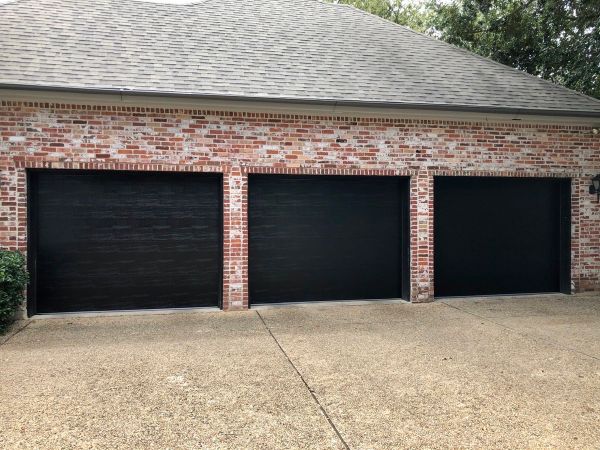
The 16×7 size is the industry standard when it comes to two-car garage doors. If you are building a new home with a two-car garage door, try upgrading to the 18×7 size, which will make it much easier to maneuver two vehicles into the garage.
What About 8 Foot Tall Garage Doors?
If you drive a larger vehicle like a Ford F-250, Ford Raptor, or lifted pickup truck, you’re going to want a garage door that is at least 8 feet tall. This will give you plenty of breathing room between your vehicle and the opening.
While 8 foot tall doors are not the industry standard in residential garage doors, they are the second most popular height. An 8 foot door will usually have five sections instead of the standard four sections found on a 7 foot tall door. Most local distributors will have them in stock and ready to install.
Garage Door Sizes for a Boat
If you own a bass boat or any low profile boat, a 7 foot tall garage door will be fine for storing your boat in the garage. If you own a center console bay boat with a stainless grab rail on the console, you are going to want at least an 8 foot tall door and maybe even a 9 foot tall door.
If you intend to store your boat in the garage, another thing to check is the depth of your garage. Many new boat trailers have swing away tongues that allow boat owners to squeeze their boats into the garage. Make sure this is not overlooked.
Golf Cart Garage Door Sizes and Examples
Your standard golf cart garage door will be a 6×7 which is 6 feet wide by 7 foot tall. This is what you will find on most homes that are located in golf course communities. You can get a golf cart door as small as 6×6 or as large as 6×14.
RV Garage Door Sizes
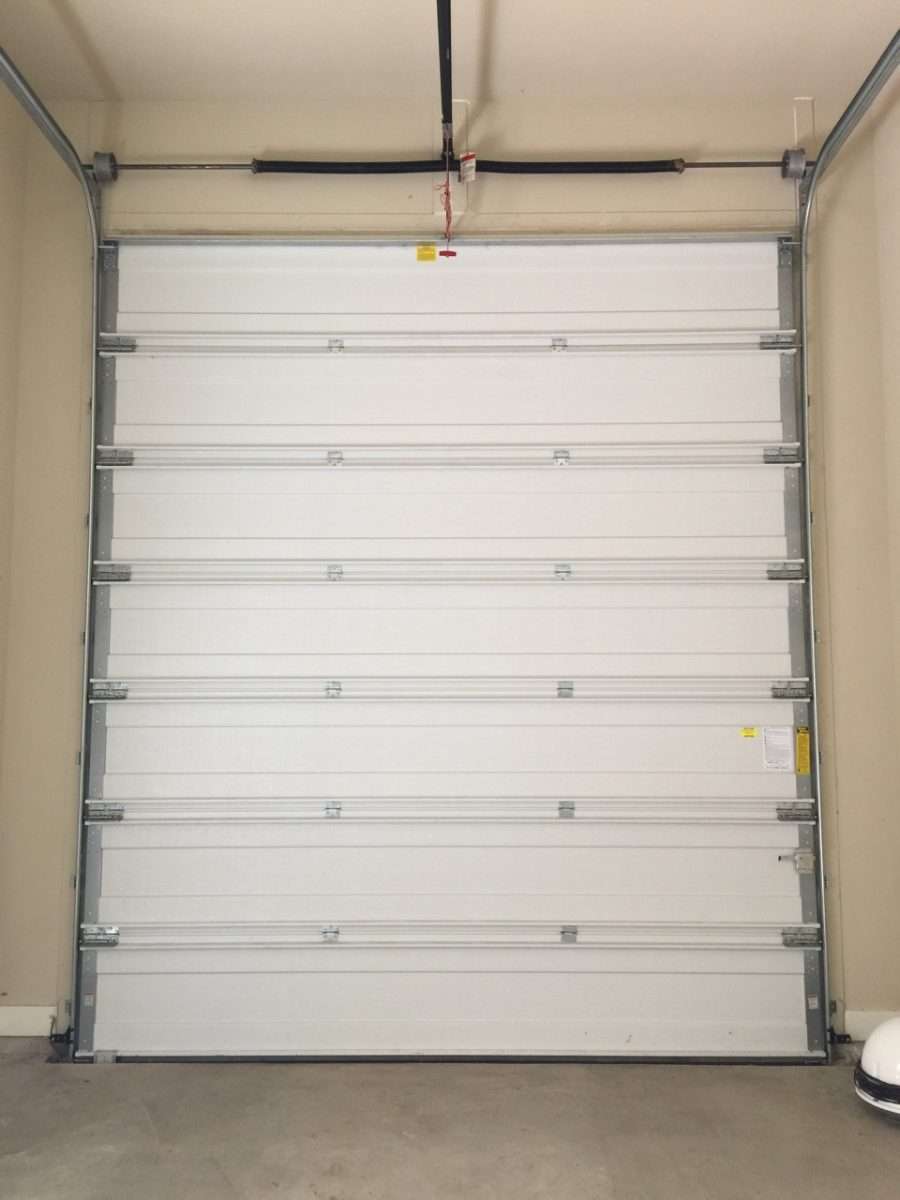
RV garage door heights are normally going to be either 12 or 14 feet tall. Of course, this is going to depend heavily on the type and size of your RV. Because so many RVs have accessories on top, the additional height is needed for clearance.
Garage Door Sizes for a Shop
Garage door sizes for a shop or warehouse can essentially be any size you want. The reason for this is you're now getting into commercial garage doors and there isn’t much of a limit on the size. Basic residential sizes all the way up to airplane hangar doors can be built to accommodate your needs.
Can I Have a Custom Size Garage Door Made?
Yes, residential garage doors can be cut down in width by two inch increments and the height can be selected in three inch increments. The maximum width available from most residential door manufacturers is 20 feet, while the maximum height is around 14 feet.
Because most residential garage door sections come in 18 and 21 inch heights, there is one height of garage door that is not available. That height is 7’ 3”. The math just doesn’t work out with the standard section heights to be able to configure that door height.
Roll Up Door Sizes
Roll up garage doors can range in size depending on what they are being used for. In some applications, smaller doors are used to close up vending areas, while larger roll up doors are used to as entry points into a warehouse.
Roll up doors can be ordered as small as 2 feet 4 inches wide by 3 foot tall. This is obviously a specialty door design to close down on a counter top where customers are most likely served.
Larger roll up doors for warehouses can be ordered in up to 30 foot widths and a height of 20 feet. Doors this large are going to have much stronger curtains made of thicker metal that can handle wind load and the occasional contact from workers.
What is the Rough Opening for a Garage Door?
First, let’s define what the rough opening of a garage door is. The rough opening is the final frame stage of the garage door opening before the final 2×6 or 2×8 finish boards are installed. These finish boards are normally painted grade lumber or a species of wood made for the outdoors, like cedar.
What this means is the rough opening height would be 1 1/2 inches taller than your garage door, and the rough opening width would be 3 inches wider than your garage door. This would be the case if you are using 2x lumber as the finish boards because they are 1 1/2 inches thick.
What is the Finished Opening for a Garage Door?
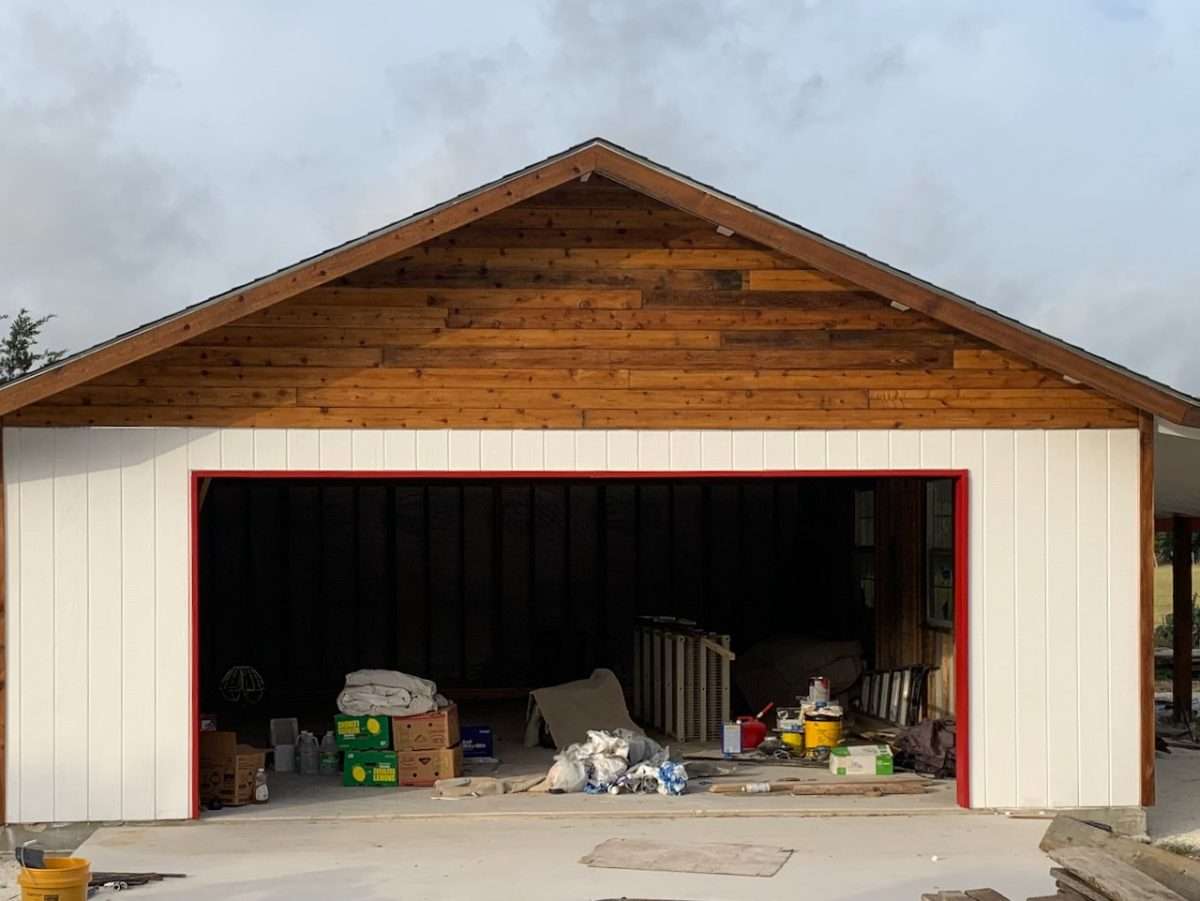
The finished opening is the final opening height and width once the wood trim boards have been installed around the opening. This height and width should be the same size as your garage door.
For instance, if you are having a standard 16×7 garage door installed, the opening should be 16 feet wide by 7 feet tall after the 2x finish boards are installed.
Garage Door Vinyl Trim
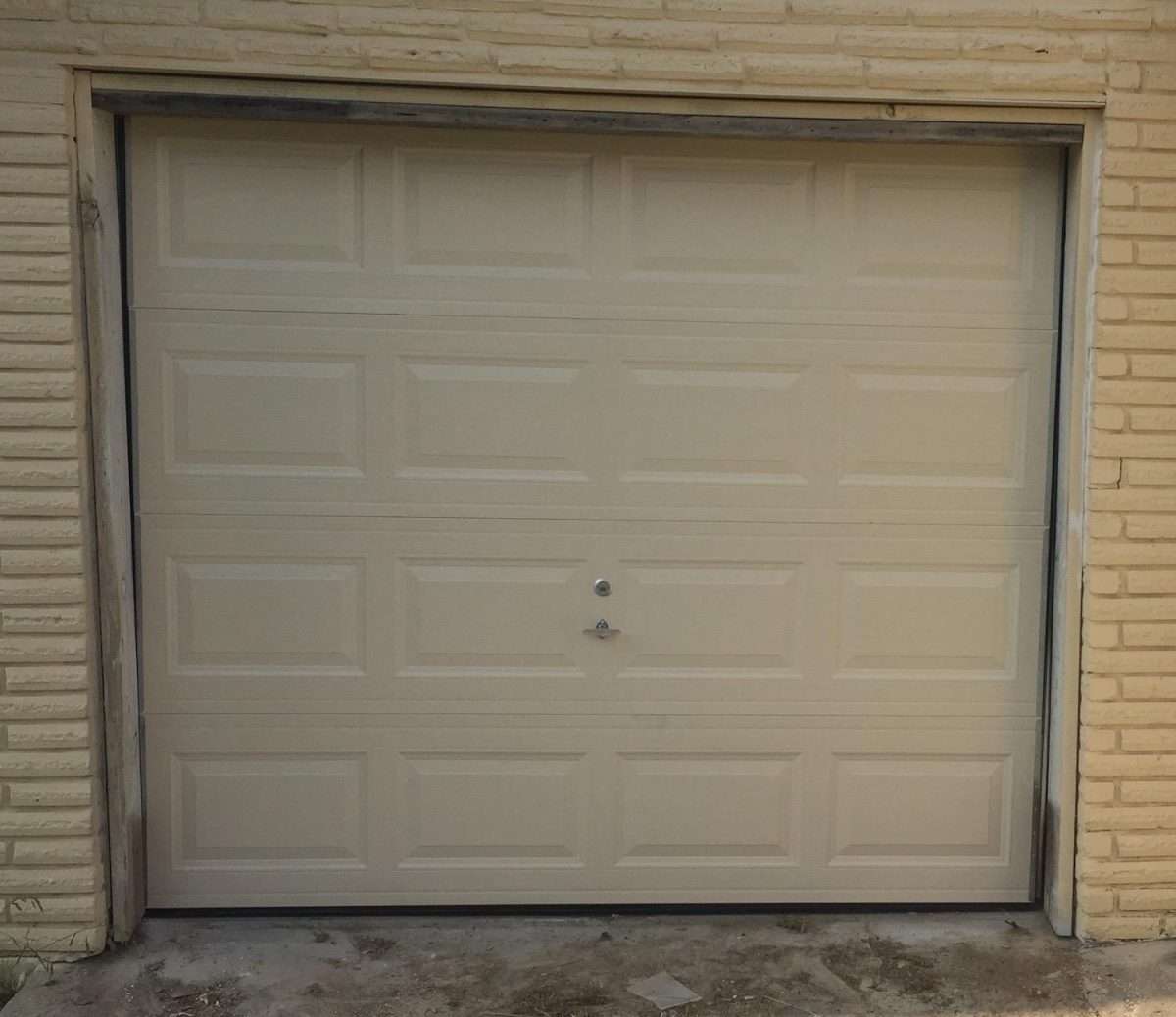
As illustrated by the photo above, there are gaps around the finish opening and the garage door. The reason for this is the vinyl trim with a flap seal needs to be installed. Garage door vinyl trim is what is typically installed by a garage door installer after the door is completed. It is the final piece that ties the garage door into the home, and it also serves as a weather seal.
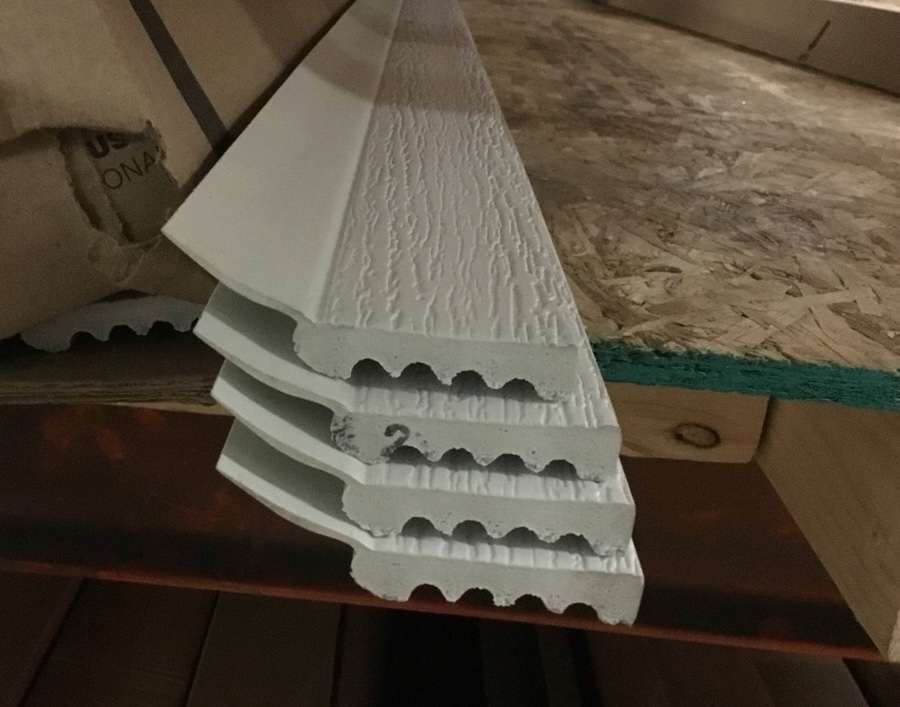
Vinyl trim installation is an important step after installing a garage door. The trim is rot resistant and features a wood grain texture to match the door and home. Vinyl trim will help cover up any imperfections in a home, like a vertical jamb that is out of plumb.
How Much Headroom Does a Garage Door Need?
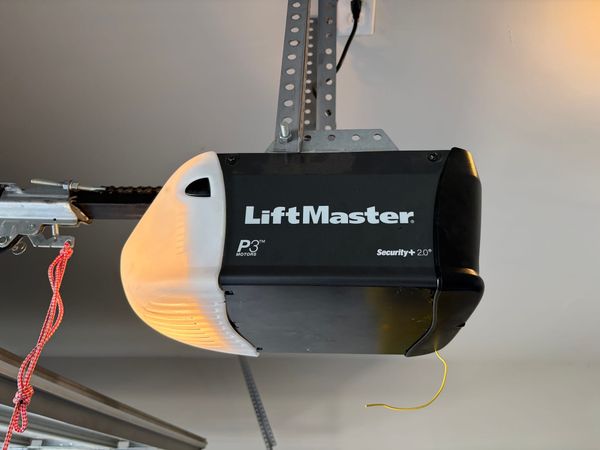
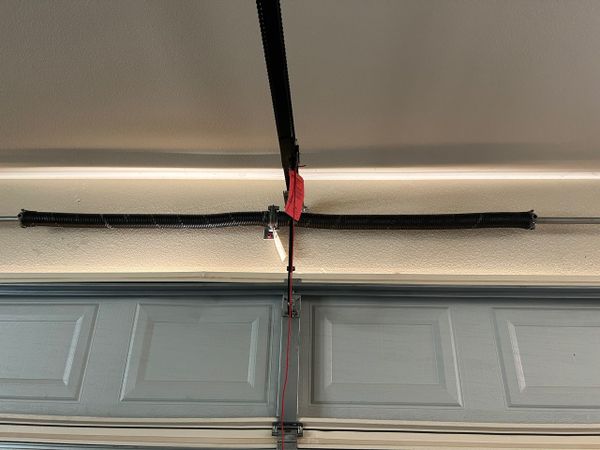
A standard lift garage door will need 12” of headroom. Headroom is the distance from the top of the garage door opening to the ceiling inside the garage. If you intend to install a standard trolley garage door opener with a rail, 14” of headroom is required to make sure everything functions correctly.
My Garage Door is 17 feet Wide. What Does That Mean?
If you have a 17 foot wide garage door installed on your home, it means there were most likely two single car garage doors installed at one point. Homes that have two 8×7 garage doors will usually have a center post that is anywhere from 8 to 12 inches wide.
Because vehicles are now much larger, many homeowners will opt to have the center post removed so they can have one large garage door installed. When you typically remove the center post in between two 8×7 garage doors, the total width you end up with is somewhere around 17 feet wide.
If you intend to convert your garage door from two single car doors to one double car garage door, make sure to hire a reputable structural engineer or framer. You will want to make sure the correct wood header is installed above the garage door opening. If not, the header could sag causing cracking in the area above or, worse, completely collapse.
Conclusion
Residential garage door sizes are not as confusing as you might have thought. As we outlined in the article, there are standards that have been around for a long time. Sitting down and planning your garage door project especially when building a new home can save a lot of headaches and regret as you interact daily with the largest moving object in your home.